
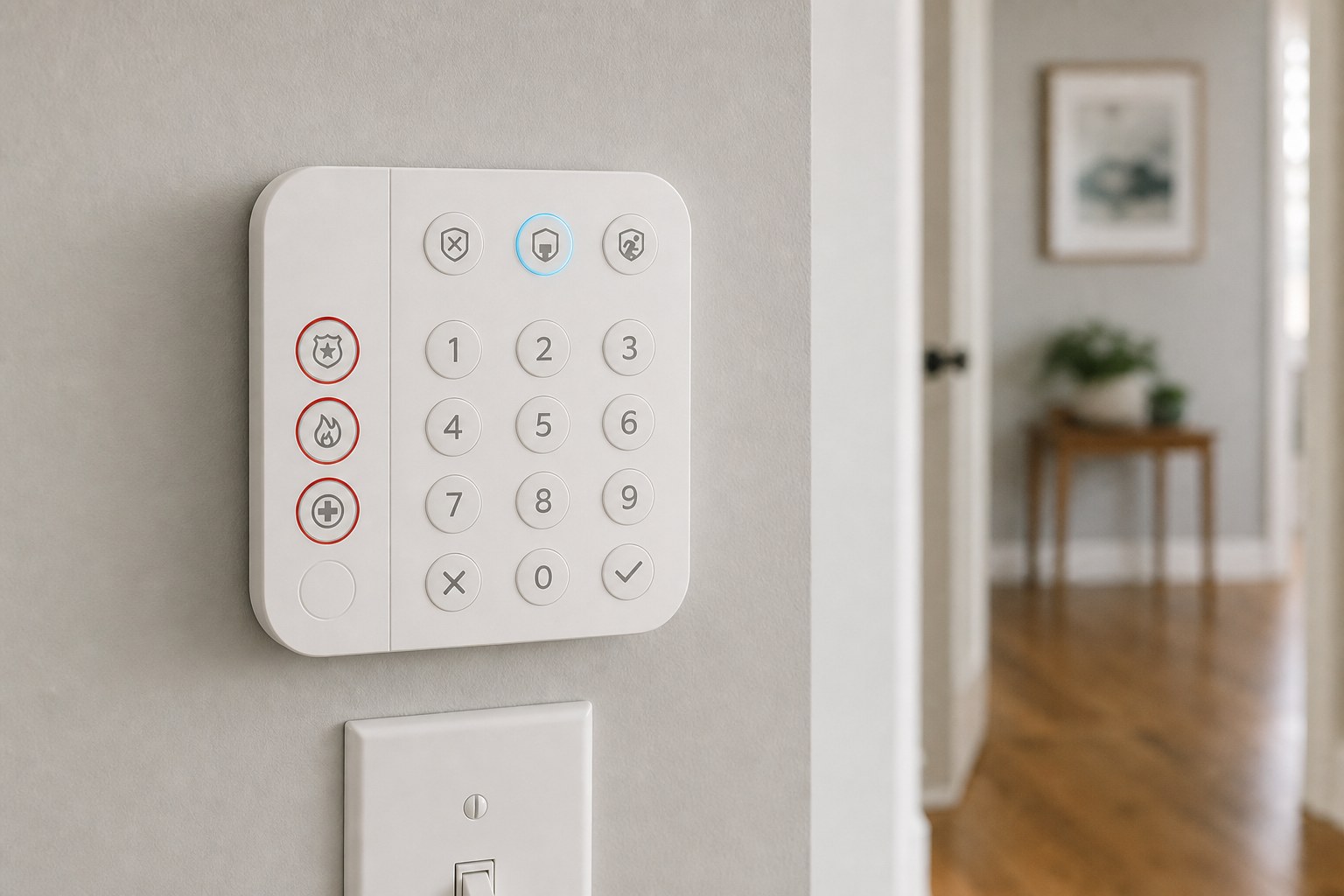
A key stops responding on a machine that is four years old and out of warranty. The customer wants the button replaced. There is no button. There is a bonded assembly roughly the thickness of a business card, and the graphic the operator has been pressing is laminated to the circuit that stopped working. You are not replacing a key. You are replacing the entire interface, and the machine is down until it arrives.
That is the thing about a membrane switch overlay that gets missed at design time. It looks like the top layer of the part. It behaves like the top layer of a part that cannot be disassembled, which means every decision made about the overlay is also a decision about the switch, whether anyone treated it that way or not.
Most of the trouble comes from those two things being bought separately.
The overlay is the only layer anybody touches, and the last one specified
Underneath the graphic there is a stack. Adhesive, a spacer carrying the vent path, a top circuit layer with the contact and usually a metal dome or an embossed conductor, another spacer, the bottom circuit, and a rear adhesive that bonds the whole thing to the panel. The tail exits somewhere along an edge to a connector.
The operator experiences exactly one of those layers. Everything they would say about the panel, that it feels solid or cheap, that the keys are easy to find, that the legends are readable at an angle, comes from the overlay. Everything that makes the switch work sits below it and gets specified by somebody else, often at a different company.
Registration is where the two meet. A tactile key has three things that have to line up: the printed legend, the embossed shape in the overlay, and the dome or contact beneath it. Get all three concentric and the key feels crisp and centered. Let the emboss sit slightly off from the dome and the key actuates on one side before the other. Operators describe that as the button being sticky, or having to press it in a particular spot, and the fix is not in the switch. It is a registration tolerance between two parts made in two places.
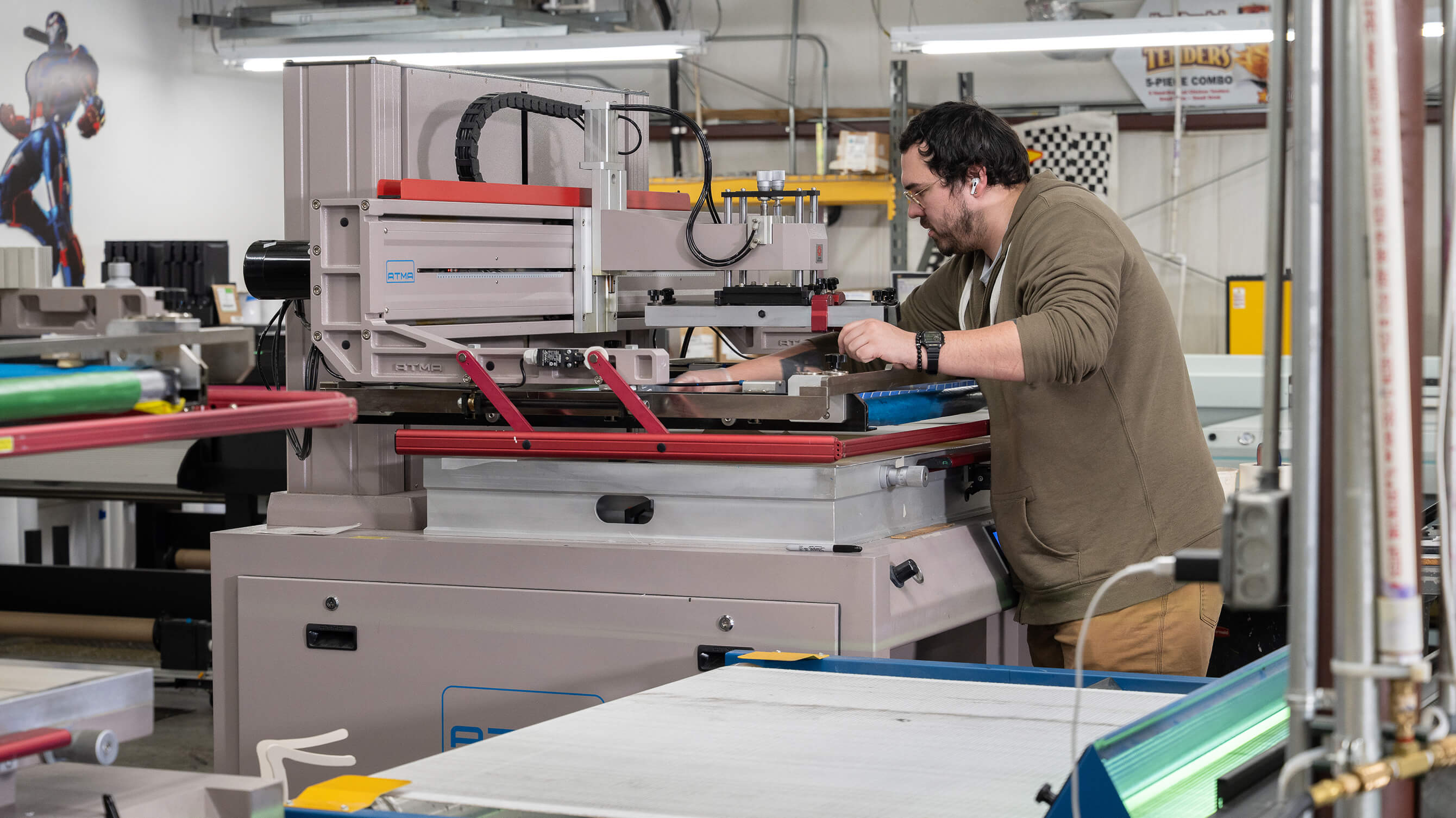
Four overlay decisions that land on the switch
These are the ones that reach through the stack. None of them look like switch decisions on a drawing.
The hard coat row is the one worth arguing about. On a flat legend panel a hard coat is close to free performance, and the previous article in this set makes the case for putting one on almost anything that gets wiped down. Over a key it is a trade-off rather than an upgrade, because that exact spot flexes every time somebody presses it, and hardness and flexibility pull in opposite directions. There are coatings formulated for this and there are coatings that are not, and the difference does not appear in a first article. It appears as fine crazing in a ring around the most used key, eighteen months in, on the panel your best customer looks at all day. When you are settling the rest of the face specification, and the gauge and finish decisions on a polycarbonate overlay cover most of that ground, treat the key areas as their own case rather than inheriting the panel default.
Venting sounds like a detail and is not. Air trapped in a sealed stack has to go somewhere when a key is pressed, and if the only path is into the neighboring cavity the keys interact with each other. Temperature changes make it worse, because the trapped volume changes and the panel gets stiffer or softer depending on the shift. If the enclosure the switch mounts to is itself sealed, the vent has nowhere to go and the design has to solve for that before anything is tooled.
The perimeter is where contamination actually gets in, and it is an overlay decision. The graphic layer usually oversails the circuit layers slightly so its adhesive lands on the panel rather than on the switch edge, and that small overhang is the seal. Trim it flush to save material and you have exposed the edge of the stack to whatever runs down the panel. Field failures that get reported as a dead key are frequently a solvent or a wash-down that wicked in at an edge and reached the contact, and by the time it is diagnosed the assembly has been replaced and nobody looks at why. If the panel gets sprayed rather than wiped, say so, because it changes how the edge is built.
Light is the other thing the overlay controls
Backlighting a membrane panel is mostly a printing problem, which surprises electrical engineers.
A legend that lights up is a window in the back-printed layer. Get the window right and it glows evenly. Get the surrounding opacity slightly thin and light leaks through the field around it, so the whole area has a dull glow and the legend loses contrast. Adjacent legends bleed into each other the same way, and on a panel with several indicators close together that reads as sloppy even when every light is working.
Dead front is the harder version. The legend is invisible until it is lit, which means the ink over it has to be dense enough to hide the legend completely when dark and translucent enough to let it read clearly when the light comes on. That is a narrow window, and it is set by ink density and layer count rather than by anything electrical. Approve dead front legends on a physical sample with the actual light source behind them, in the light the panel will live in. A screen proof cannot tell you anything useful about a dead front, and neither can a sample lit by a different diode than production will use.
Freeze these at first article
A membrane switch assembly is not a part you iterate on. Tooling exists, the layers are bonded, and a change to the overlay usually means a change to something under it. Lock the following while there is still a prototype on the bench.
- Registration tolerance. Between printed legend, emboss, and the dome or contact beneath, stated as a number on the drawing rather than left to good practice.
- Key feel. An approved physical sample, pressed by the people who will use it, with gloves on if that is how it gets used.
- Coating by region. Face coating over key areas specified separately from the coating over static graphics.
- Backlight approval. Physical samples lit with the production light source, including every dead front legend.
- Vent path and tail exit. Documented against the enclosure, not just the switch drawing.
Once those are frozen, the ongoing risk shifts to whether run four matches run one, which is a different discipline entirely and worth reading separately in what makes control panel overlays repeatable. Embossing in particular is a tooled process with a tool life, and registered embossing held to a consistent depth is what keeps key feel from drifting quietly across a production year.
What to send when you quote a switch assembly:
- Overlay artwork with a revision number, fonts outlined, and emboss and cut paths on separate layers
- The switch drawing, including dome or contact locations, with registration to the overlay called out
- Enclosure detail: mounting surface, finish, cutout for the tail, and whether the enclosure is sealed
- Backlight detail: source, color, and which legends are dead front
- Use conditions: gloves, cleaning agents, temperature range, and expected actuations over the life of the machine
The last question is the one to settle before any of it, and it is commercial rather than technical. Whoever supplies the overlay and whoever supplies the switch have to agree on the tolerance between them, and if those are two companies then you own that interface. Every ambiguity in it becomes a conversation with two suppliers who each have a defensible position. Sourcing the assembly as one part moves that boundary inside a single set of walls, which is the same argument that applies across an OEM graphics supply chain generally and is sharpest here, because this is the part where the boundary runs straight through the middle of a bonded assembly.
None of this is exotic work. It is a handful of decisions that have to be made in the right order, early, by people who know what the layer below is doing. On equipment that stays in service far longer than anyone plans for, the interface is the part the customer touches every day and the part nobody can service in the field. That is worth an extra week at design review.