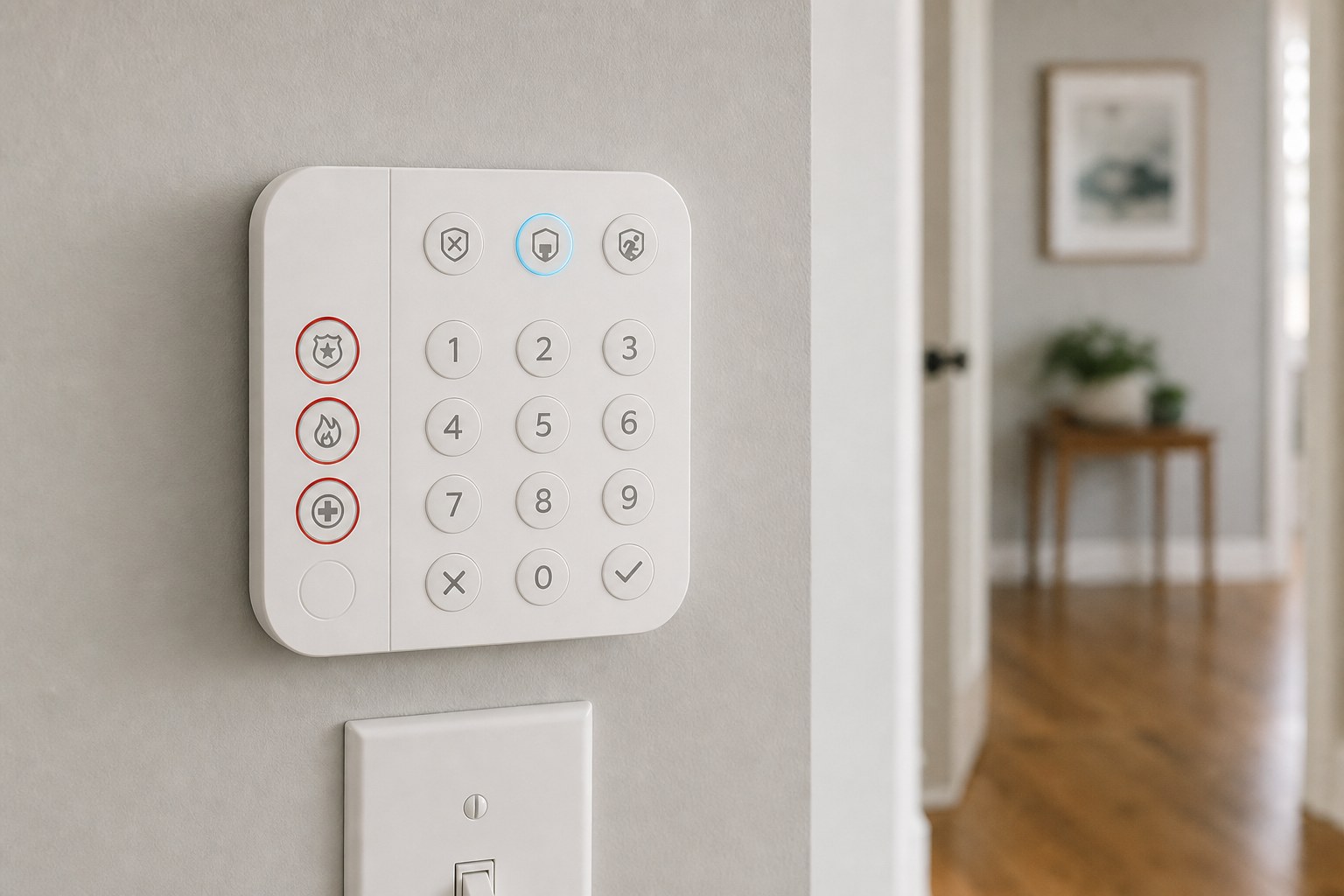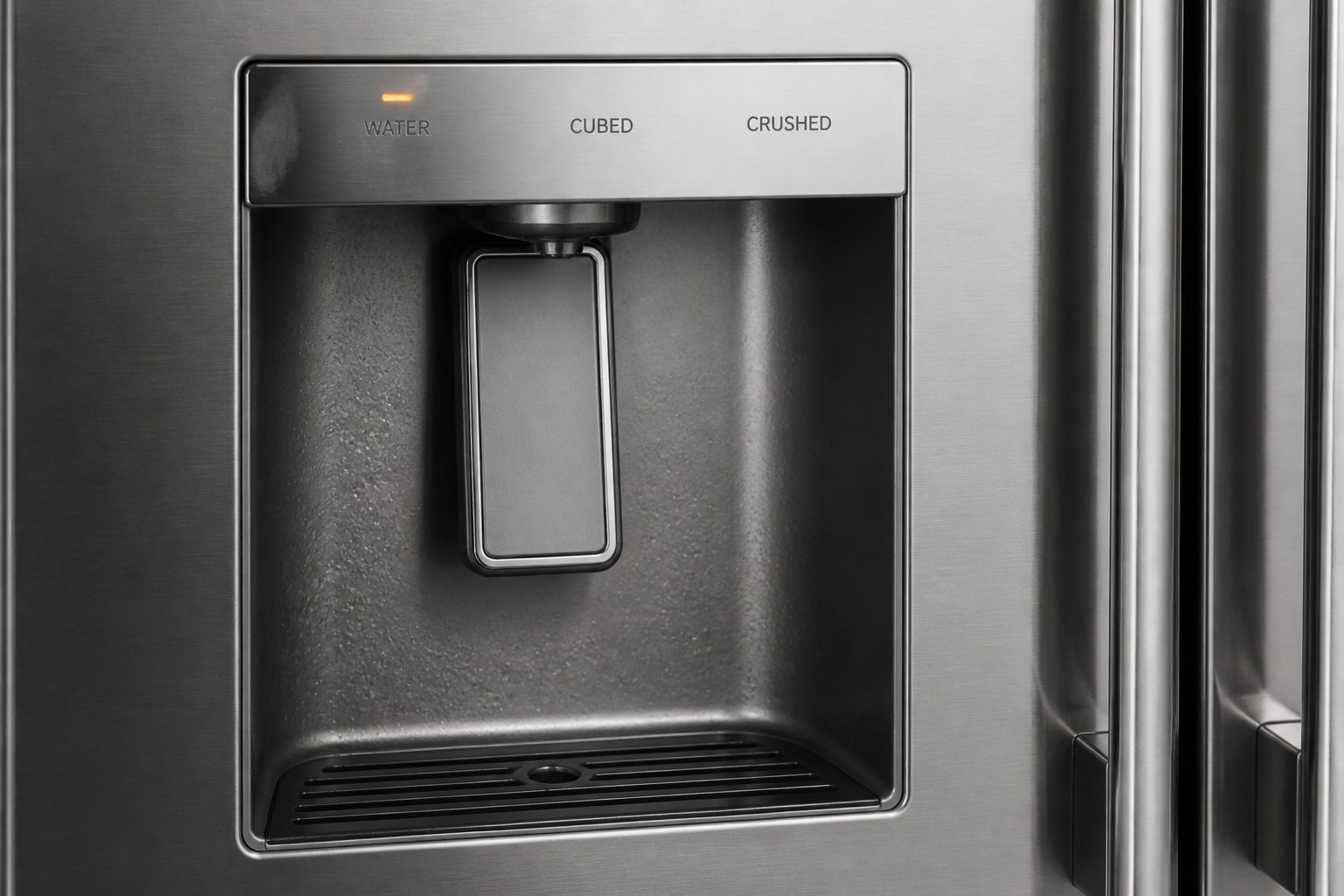
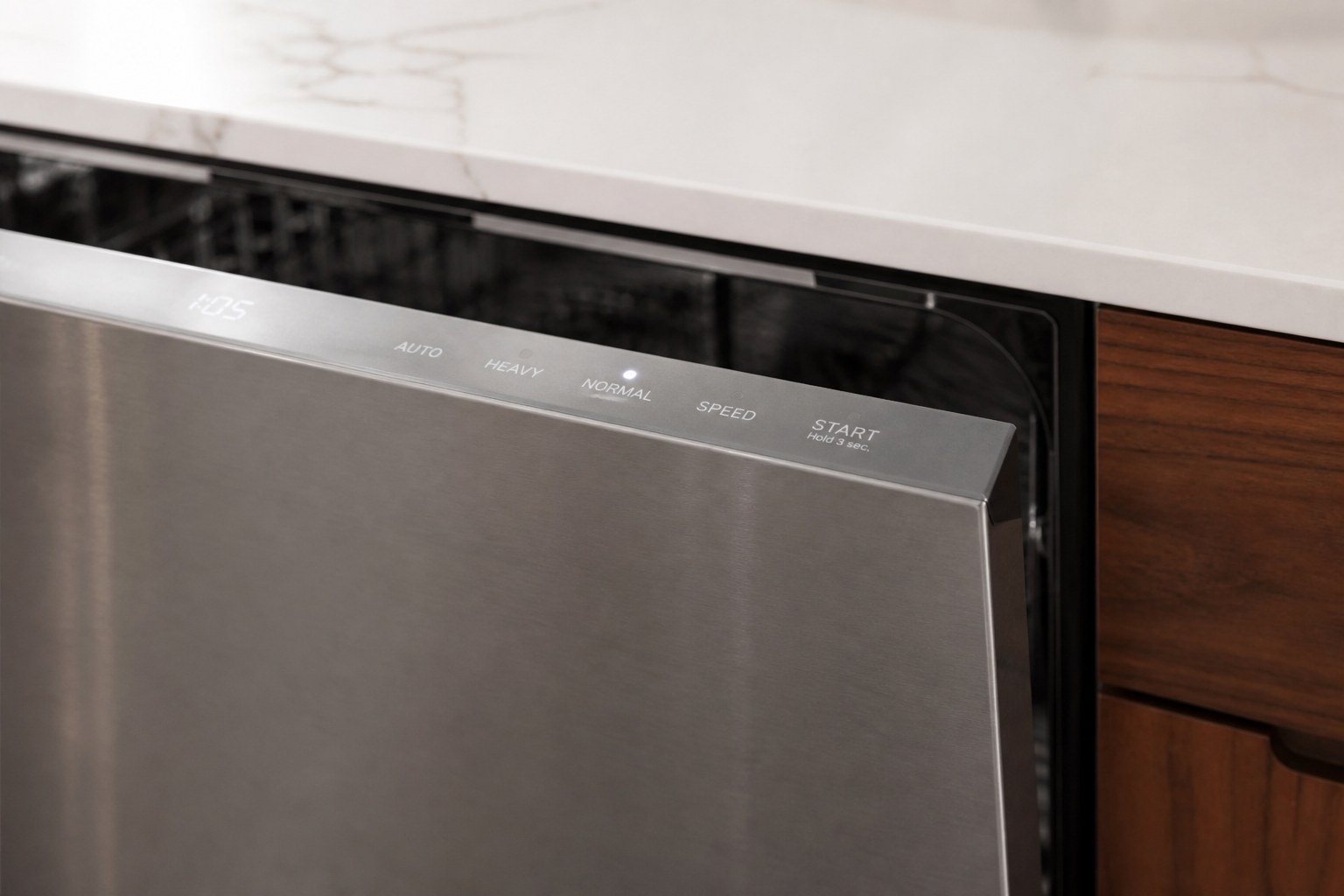
The overlays arrived on time and the line still stopped. Same part number, same supplier, same artwork file as the run before. But the blue is a half step off from the units already in the field, two of the switch windows sit a hair proud of the display bezel, and the assembler who has built four thousand of these can feel the difference before he can name it. Now somebody has to decide whether to run them anyway.
That decision is the reason overlays are worth more attention than they usually get. A control panel overlay looks like a printed graphic, so it gets bought like one. It is not. It is a laminated assembly with cutouts, adhesive, and dimensional tolerances that has to register against a molded or fabricated part, survive whatever the operator does to it, and come back identical eighteen months from now when you order more. When the graphic is a membrane switch overlay, that registration also has to hit the circuit stack underneath.
Everything below is about that last word. Identical.
An overlay is a part, not a print
Pull a good overlay apart and you get four decisions stacked on top of each other.
The top is a hard coat or a textured finish, and it is doing two jobs: resisting abrasion from fingers and cleaning cloths, and controlling glare so the operator can read the panel under plant lighting. A gloss overlay photographs beautifully and is miserable under a skylight.
Under that is the graphic, printed second surface on the back of the film so nothing touches the ink. Below the graphic sits any selective texture, embossing, or dead-front window. Dead front is the effect where a legend is invisible until the light behind it comes on, and it is a printing decision, not an electrical one. Get the ink density wrong and the legend ghosts when it should be dark.
The bottom layer is adhesive, and it is chosen against the panel it mounts to, not against the overlay. That distinction matters more than anything else on the list.
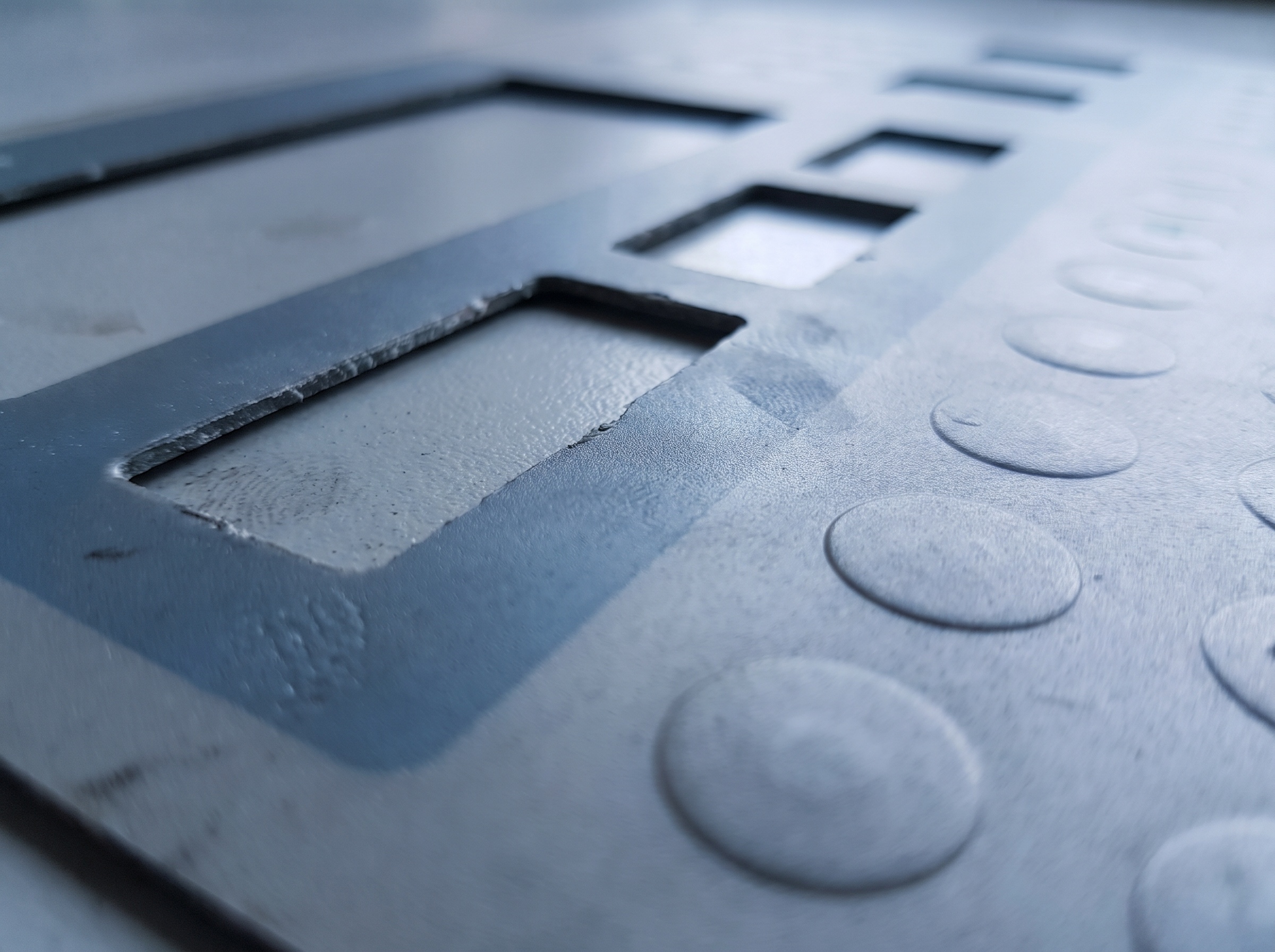
Then there is the shape. Windows, button cutouts, mounting holes, and the outside profile all come from a die, and a die has a tolerance that is not the same as your drawing tolerance.
Where repeatability actually breaks
Ops managers rarely have a problem with the first article. The first article gets attention. Problems live in run four.
Color is the usual suspect and the least understood. A color built from process ink can drift between lots because it is mixed from separations every time. A spot color mixed to a Pantone reference and run from a single ink batch does not drift the same way. If your panel has to match units already installed, specify spot inks for the brand-critical colors and accept that it costs more. The alternative is a color that is technically in tolerance and visibly wrong sitting next to last year's machine.
Die wear is the second. Steel rule dies soften with use, and a die at the end of its life cuts a window a fraction larger and a little less crisp than the same die when it was new. That is fine until the window has to clear a display bezel by a small margin. Ask your supplier how they track die life and when they retool. A supplier who cannot answer that is telling you something.
Material lot variation is real but usually small. Film gauge and surface energy move slightly between lots, and where it shows up is adhesion on a marginal surface rather than in the printing.
The one that causes the most damage is not a manufacturing issue at all. It is artwork revision drift. Engineering moves a legend, marketing updates the logo, somebody emails a file, and now there are three versions of the same part number in circulation and nobody is certain which one the last good run used. Every overlay problem I have watched turn into a real cost started here.
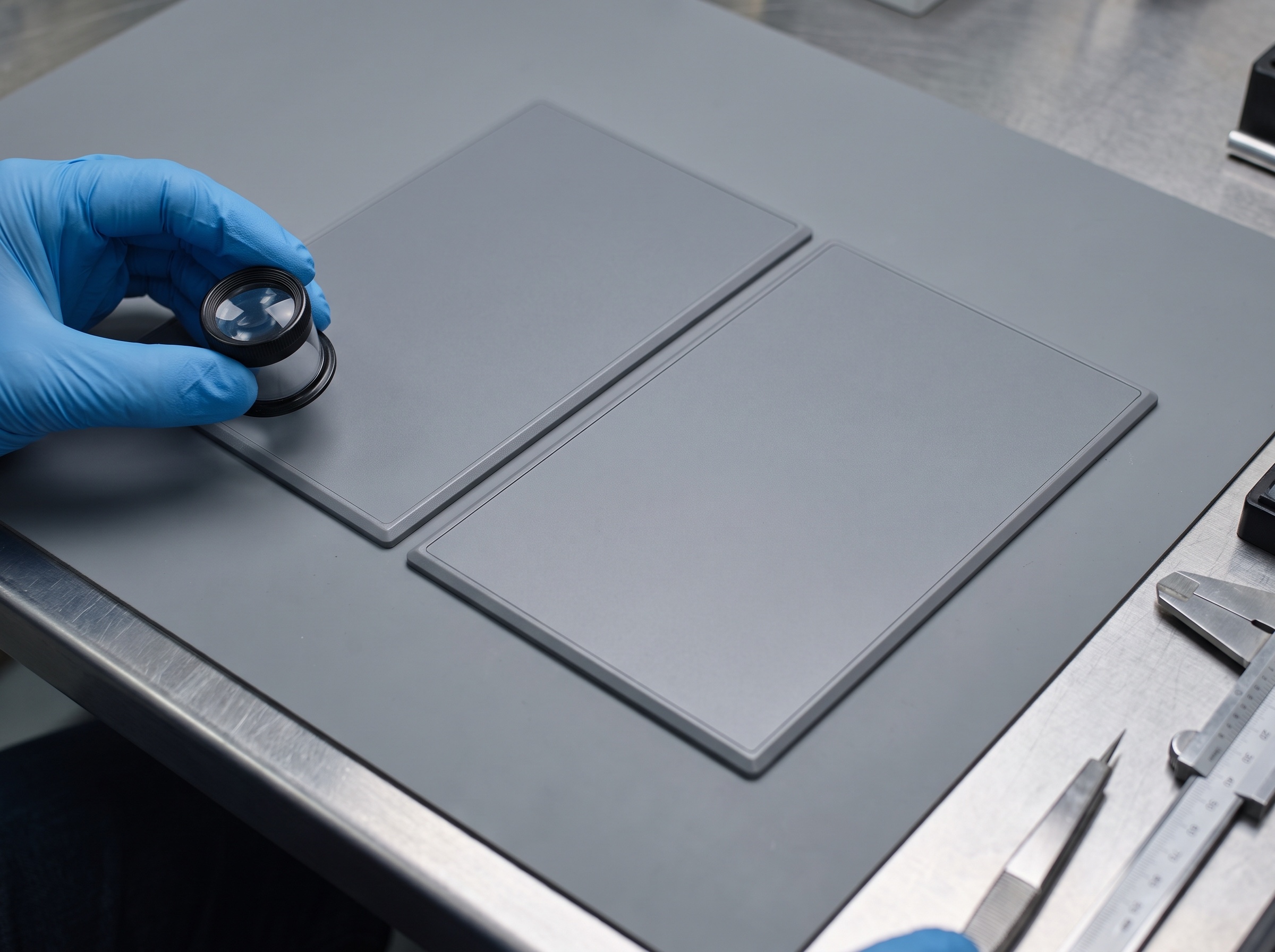
Incoming inspection is where you catch all of this, and most plants inspect the wrong thing. Counting parts and checking the outside dimension tells you almost nothing. Pull three overlays from different places in the carton, lay them over a known good panel, and look at window registration and how the corners sit. Then set one beside a retained sample from the last approved run, under the same light you will assemble under, and look at color straight on and at an angle. Second surface printing shifts slightly with viewing angle, which is why a lot that matches on a bench can look wrong on a machine. Two minutes at receiving beats finding it at assembly with a build already started.
The construction choices that actually cost you something
Most overlay quotes differ because of these four decisions, not because of the printing.
Adhesive is the one people skip, and it is the one that generates field failures. The bond is a relationship between the adhesive and the panel surface, so a textured powder coat, a plated finish, or a plastic housing each want something different. The same overlay that has never lifted on a painted steel enclosure will start peeling at the corners on a textured one, and the overlay did not change. If you have already specified identification for the same equipment, the surface information is usually sitting in that file already.
What to lock before the first production run
The point of a first article is not to confirm that it looks right. It is to freeze everything so that run four looks the same. Lock these:
- The artwork revision. One file, one revision number, held by the supplier as the master. Every future order references it. Changes get a new revision, not an email.
- Color standard. Physical approved samples, retained by both sides, with a stated acceptable variation. Not a screen approval.
- The critical dimension. Name the one that matters, usually window-to-window or window-to-mounting-hole, and tolerance that rather than the overall size.
- Panel surface. Material and finish documented, with a sample panel at the supplier if the surface is unusual.
- Release schedule. Annual volume and how it ships, so tooling and ink batches are planned around your actual pattern.
That third item is where most dimensional arguments come from. An overlay held tight on its outside profile and loose on window position will measure correctly and still fail to line up with the panel underneath. The outside edge is the easiest thing to inspect and almost never the thing that matters.
Which brings back the decision at the top. When a lot lands marginal and the build is waiting, the useful question is not whether the parts meet the drawing. It is where these units are going. Overlays heading into a plant that already runs twenty of your machines will be compared directly against them, and a color that is technically acceptable and visibly different costs you more in credibility than a week of delay does. A lot going to a first-time customer with nothing to compare against is a different call entirely. Decide it on that basis, then record what you decided and why, because the same question comes back in eighteen months and the person answering it may not be you.
What to send when you ask for a quote:
- Vector artwork with a revision number in the file name and fonts outlined
- A drawing that calls out which dimension is critical
- The panel material and finish, plus a sample part if you have a spare
- Whether any legend is dead front or backlit, and the light source behind it
- Operating environment: cleaning agents, temperature range, gloved or bare hands
None of this slows a project down. It front-loads the arguing into a week where arguing is cheap. Screen printing is well suited to this work precisely because it is repeatable at volume, and the same discipline that makes a run consistent is what lets the fourth order match the first. When an overlay problem does show up, the fix is usually a decision that was never written down, which is a better problem to have than a manufacturing one.
If you are specifying a panel now and the surface finish is still open, that is the conversation to have first. Construction and material questions get cheaper the earlier they land, and the overlay is one of the few parts on the machine where a decision made in week two still shows up in year six.