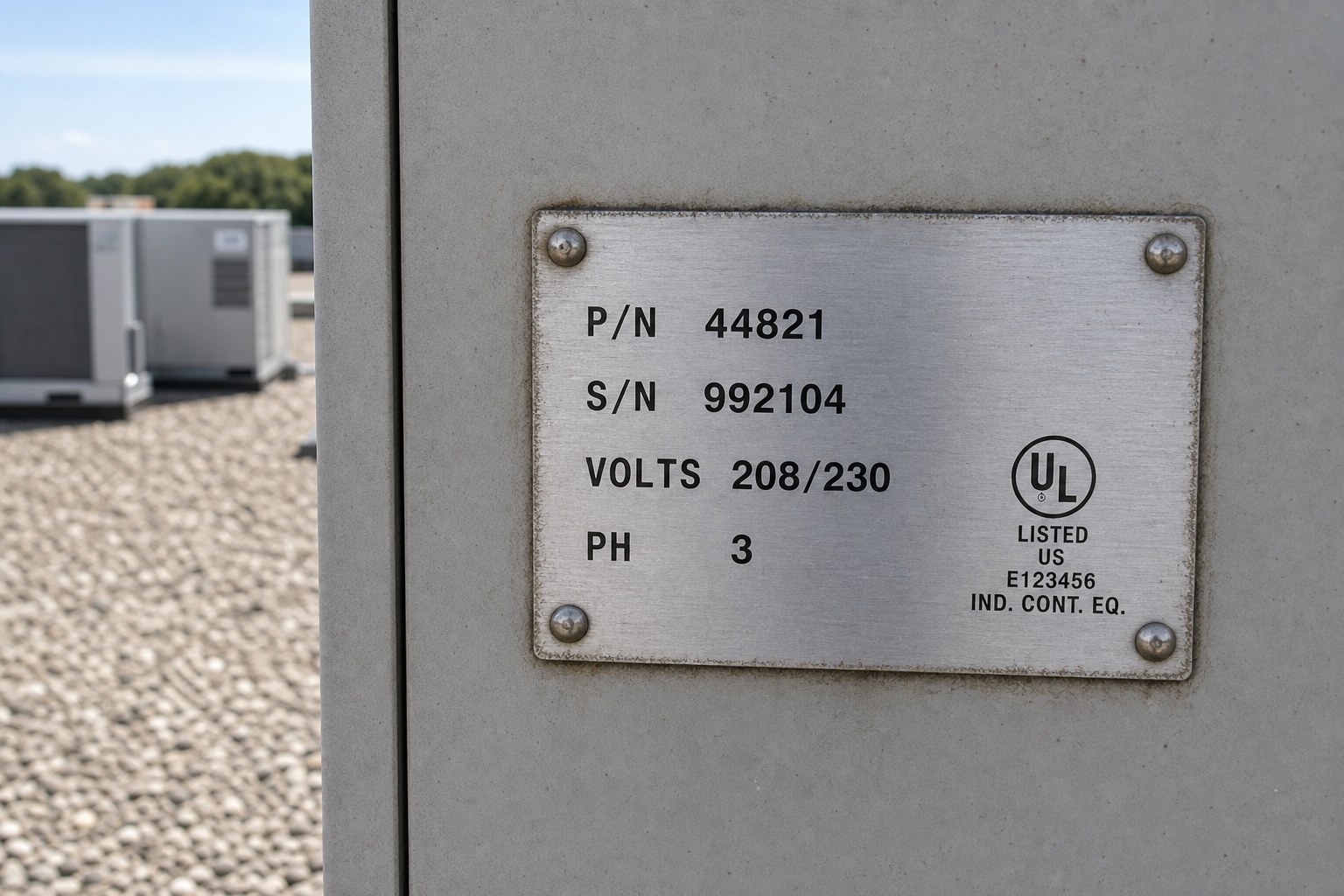
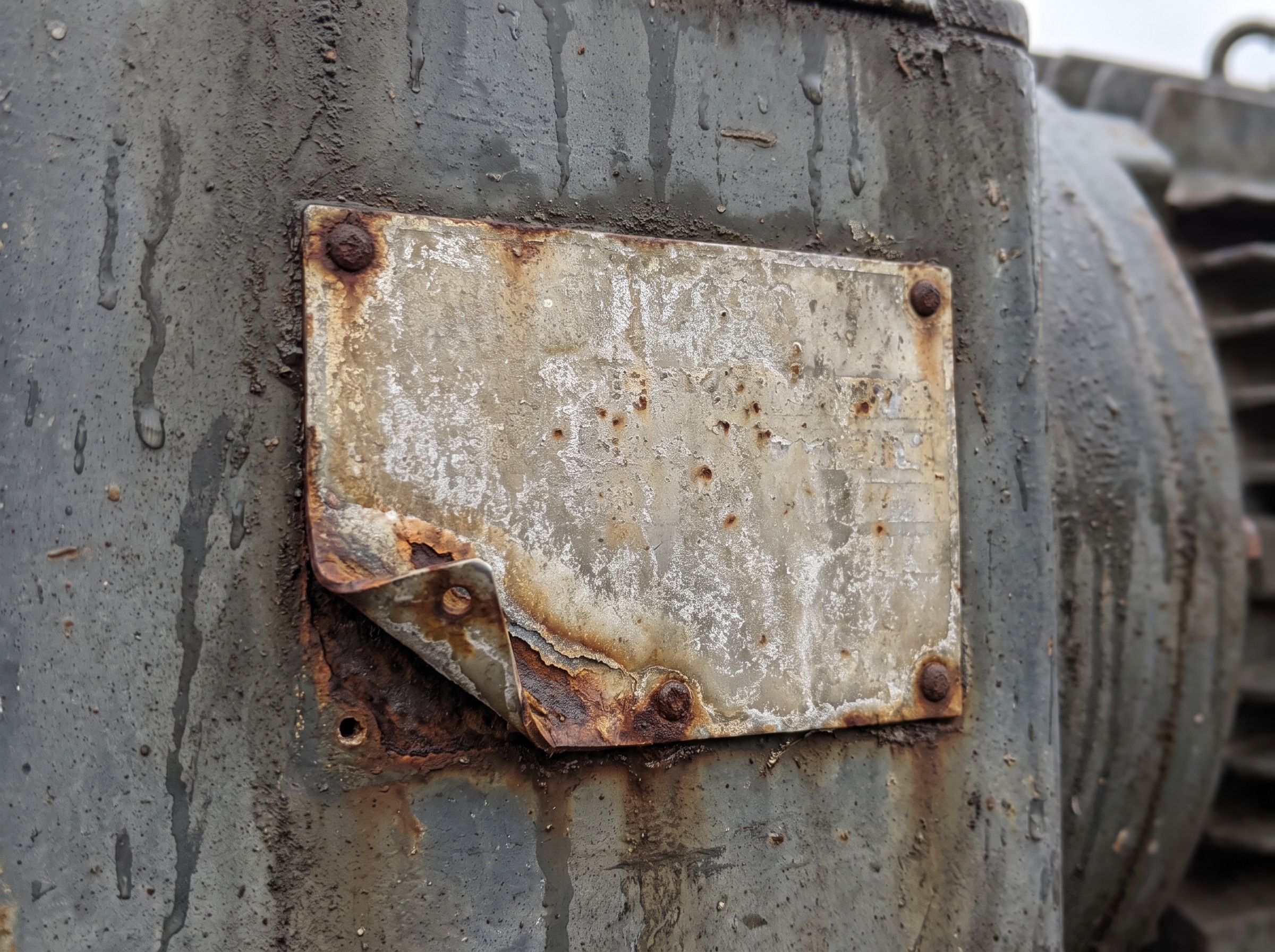
The machine still runs. That is usually how this starts. A press or a compressor or a packaging line is eight years into a twenty year service life, running fine, and somebody needs the serial number to order a part. They walk out to the machine and the nameplate is a gray rectangle. The ink is gone. The barcode is gone. What is left is a legible fragment of a model number and a phone call to a distributor who cannot help without the rest of it.
Nobody planned for that. Equipment nameplates get specified late, usually by whoever is closing out the bill of materials, and they get specified as a part number rather than as a component with a service life. The plate costs a few dollars. The machine costs six figures. The plate is the thing that fails first, and when it does it takes the traceability with it.
If you buy identification for capital equipment, the useful question is not what a nameplate costs. It is how long it has to stay readable, and what is going to attack it during that time.
What actually destroys a nameplate
Field failures cluster into a short list, and the order surprises people.
Cleaning chemistry does more damage than process chemistry. A plate on a food line survives the product it runs next to and dies from the caustic wash-down that hits it three times a day. Solvent wipes on a maintenance schedule do the same thing more slowly. When a buyer tells us the environment is mild, and the plate keeps coming back faded, the wash-down protocol is where we look first.
Ultraviolet exposure is the one everybody expects, and it matters, but it matters mostly outdoors or under certain plant lighting. Pigment choice drives this more than substrate does. Some reds and process colors shift years before anything else on the plate does, which is why a logo can go orange while the black text beside it stays perfect.
Then there is abrasion, and abrasion is almost always human. Gloves, rags, tool handles, a boot on a step-over. Plates mounted where people grab the machine wear out in a fraction of the time of an identical plate mounted eighteen inches higher. Mounting location is a durability decision and it rarely gets treated as one.
Heat cycling kills adhesive rather than ink. The plate does not peel because the adhesive was weak. It peels because the substrate and the equipment housing expand at different rates through a few thousand thermal cycles and the bond line fatigues at the edge. You see it start as a lifted corner, months before it lets go.
Substrate is the decision that sets everything else
Once the environment is honest, substrate follows from it. Most industrial nameplates land on one of four materials, and the trade-offs are stable enough to put in a table.
The interesting cases sit between rows. A machine that runs hot but gets washed with caustic is not a clean polyester job and not an obvious aluminum job either, and the right answer depends on which exposure is continuous and which is intermittent. That is a conversation worth having before the drawing is released, not after the first field return.
Surface printing versus subsurface printing
Here is the detail that changes nameplate life more than substrate choice does, and it is the one most buyers have never been walked through.
On a surface-printed plate, the ink sits on top of the material. Everything that touches the plate touches the ink. Add a clear laminate or a hard coat and you buy real protection, but the protection is a layer that can itself be abraded, chemically attacked, or lifted at an edge.
On a subsurface-printed plate, the graphic is printed on the back of a clear substrate and the substrate itself becomes the shield. Chemicals, solvents, abrasion and UV all hit clear material. The ink is behind it. There is nothing to scratch off because there is nothing exposed. Second-surface printing is why a twenty year old control panel legend can still be crisp while the painted housing around it has chalked.
It costs more per piece. It is worth it on anything where a field replacement means a service call, or where an unreadable plate creates a compliance or traceability problem. For a plate on a machine that will be recertified and relabeled every few years anyway, it is money you do not need to spend. Our screen operation runs both, and the honest recommendation depends on the service life you actually need rather than the one that sounds impressive in a spec.
Serialization complicates this. If every plate carries a unique number or a barcode, the variable data gets applied after the base print, which means it lands on the outside of a subsurface plate unless the construction is designed around it. There are ways to handle that. A clear overlaminate across the variable field only, or a separate serial tag mounted alongside a fixed nameplate, both work. What does not work is assuming the barcode inherits the durability of the plate it sits on. The plate outlives the barcode, the scanner stops reading it, and somebody is typing numbers by hand again. If traceability is the reason the plate exists, say so early, because it changes the construction rather than just the artwork.
Writing a spec that gets you comparable quotes
Most nameplate quotes are not comparable, which is the real reason purchasing loses time on them. Three suppliers quote three different constructions against a drawing that specified a size, a color, and a due date. The cheapest number wins and the difference shows up in year four.
A spec that produces comparable bids answers these, in this order:
- Service life. How many years does this have to stay fully legible, and what happens operationally if it does not.
- Exposure. Chemicals by name, including cleaning agents. Temperature range and cycle frequency. Indoor, outdoor, or both.
- Mounting surface and method. Material, finish, texture, and whether the surface is powder coated. Adhesive or mechanical fastening.
- Content and variable data. Fixed artwork, serialized numbers, barcodes, or date codes, and who supplies the data file.
- Volume and release pattern. Annual quantity and whether it ships in one run or against releases.
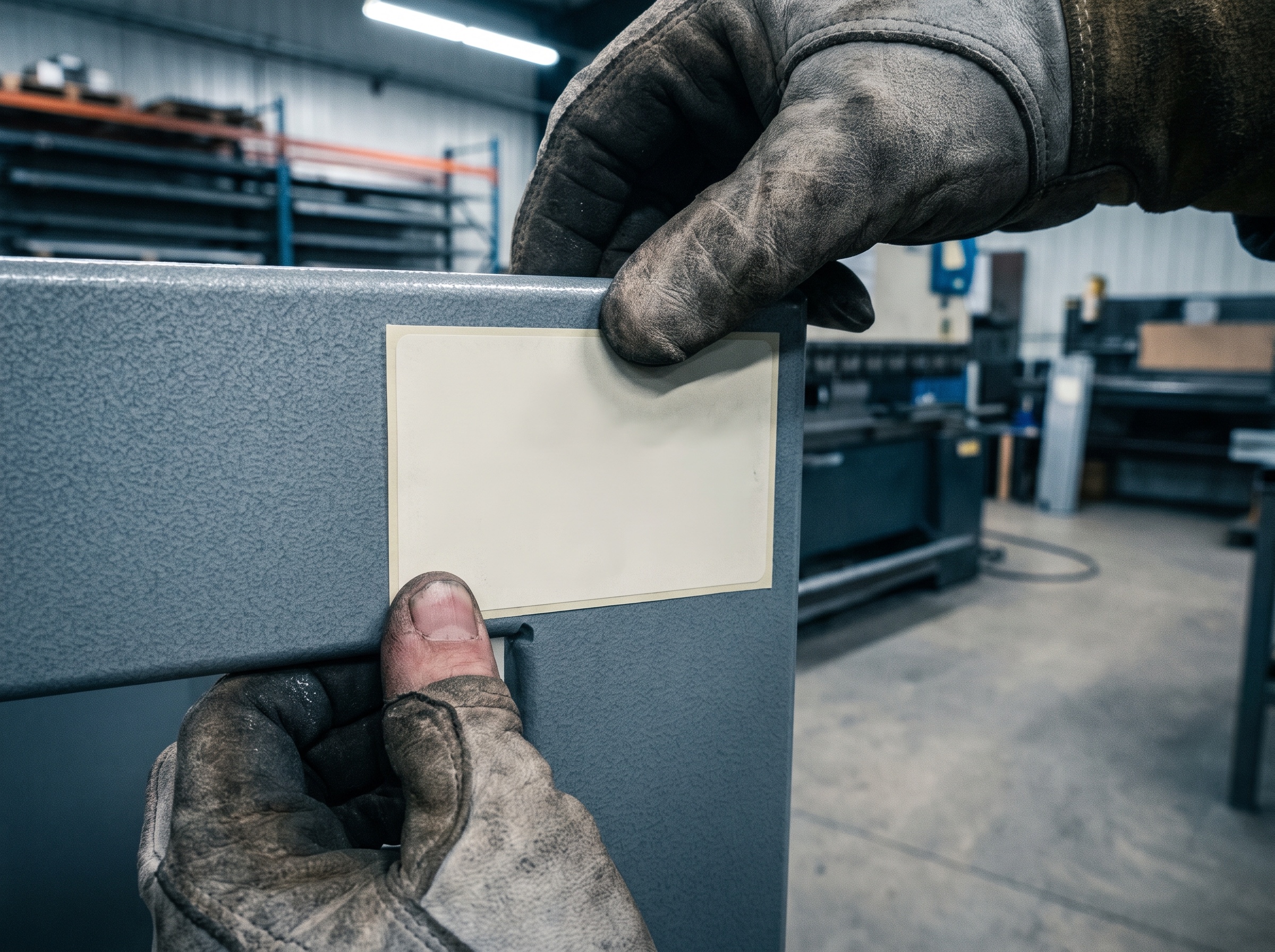
The mounting surface is the line item that gets skipped most and causes the most adhesive failures. Powder coat is the usual culprit. A textured powder coat gives an adhesive far less real contact area than the flat panel everyone pictured, and a low surface energy coating can defeat a general purpose acrylic outright. If you know the housing finish at quote time, you get an adhesive specified for it. If you do not, you get a default, and the default is right most of the time, which is a different thing from being right on your machine.
Lead time and volume deserve their own line. Screen printing carries setup, and setup is charged per color and per screen. A four color plate ordered two hundred at a time carries a very different unit cost than the same plate ordered two thousand at a time, and the break point usually falls somewhere a buyer would not guess from the drawing. Ask for pricing at your annual volume and at your release quantity, then compare. When the gap is wide, a blanket order with scheduled releases beats repeat small runs, because you pay the setup once instead of every quarter. Nonstandard shapes and specialty substrates add tooling on top of that, which is useful to know before someone rounds the corners on a drawing for aesthetic reasons.
What to send with the request:
- Artwork as vector, with fonts outlined and Pantone references called out
- A photograph of the mounting location on the actual equipment
- The cleaning and maintenance procedure, or a note that none exists
- Any customer or regulatory marking requirements the plate has to carry
- The tolerance that matters most, whether that is overall size, hole position, or copy placement
That last one is worth a sentence. Nameplates are usually toleranced on the outside dimension because that is the easy number to write. On a plate that mounts with two fasteners through a bracket, hole-to-hole position is the tolerance that decides whether the part fits, and an outside dimension held tight while hole position drifts gives you a plate that measures correctly and will not mount.
None of this is complicated. It is just work that happens either at specification time or at failure time, and the version that happens at specification time is considerably cheaper. If you are pulling together requirements for equipment that has to carry its identification for a decade or more, the constraints of industrial equipment are worth walking through with someone who has seen how these plates come back. We would rather help you write the spec than quote a drawing that was going to fail anyway.