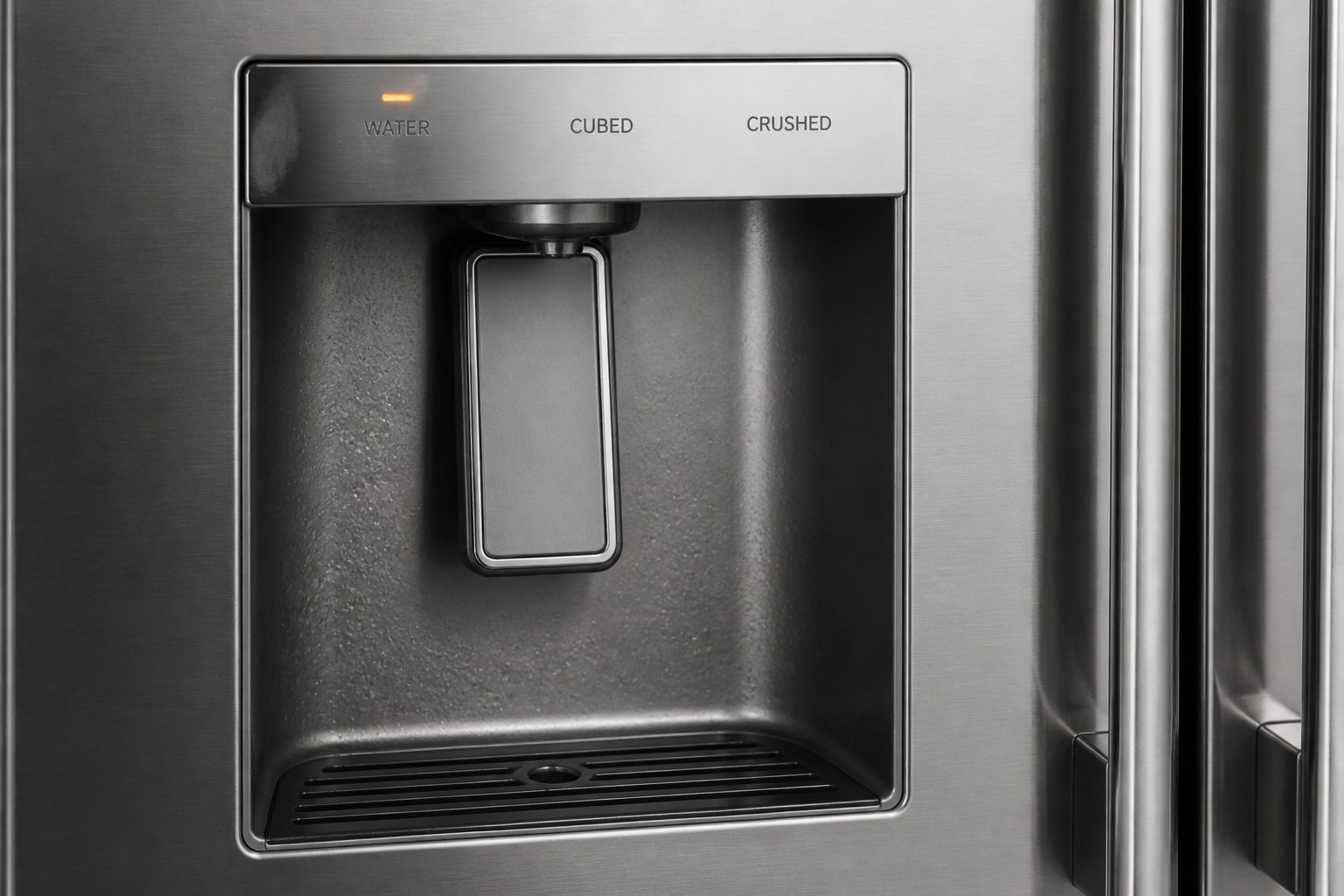
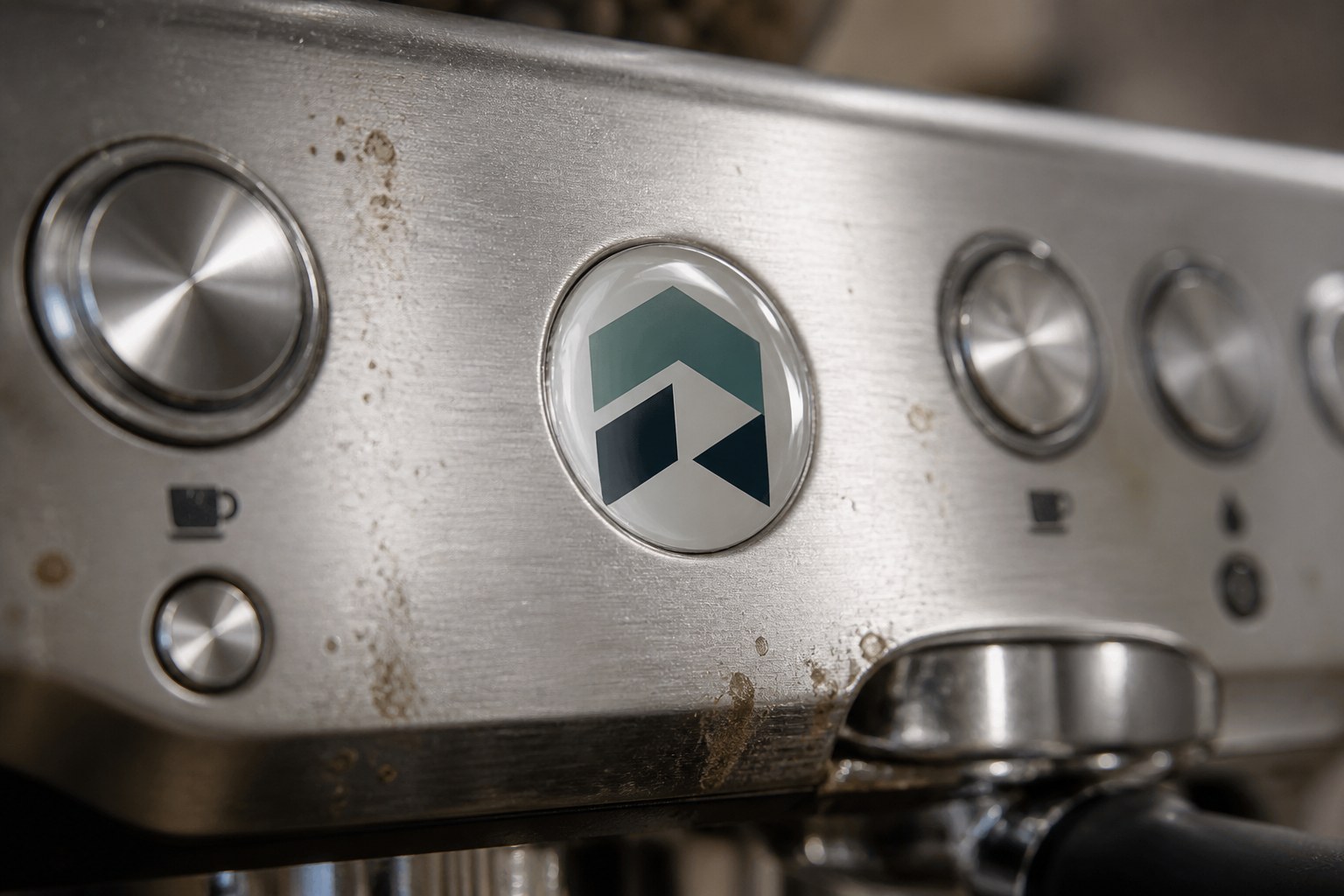
Two of your products sit on a table at a trade show. Same generation, same badge artwork, built eleven months apart. One badge reads as part of the machine. The light bends across it, the color has depth, and a customer's thumb finds a smooth curve. The other one is flat at the top, the edge has pulled back from one corner, and the whole thing reads as a sticker somebody applied at the end of the line.
Nothing in the artwork file changed. What changed was the resin, or the die, or the shape of the piece the resin had to sit on. Domed labels fail in ways that have almost nothing to do with printing, and brand teams usually find that out after the first reorder.
The useful thing to understand is that a dome is not molded. It is poured.
The dome is a liquid holding its own shape
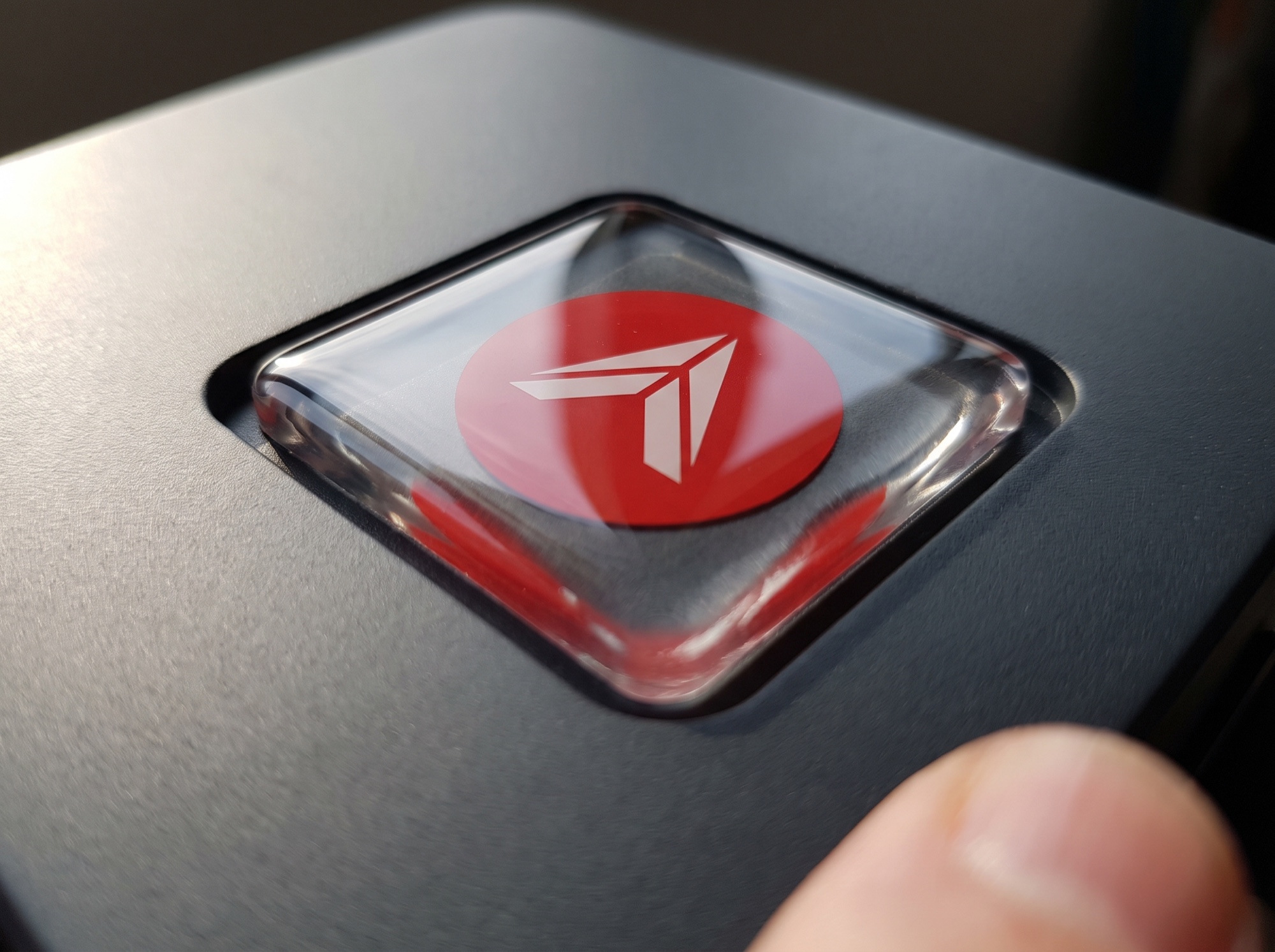
A domed label starts as a printed and die-cut piece. Polyurethane resin is dispensed onto the face of it, and then the resin does the work. It flows out to the cut edge, stops there, and surface tension pulls the top into a crown. It cures in that shape. Nobody presses it, nobody tools it, and there is no cavity defining the profile.
That one fact explains most of what goes wrong.
Because the edge is holding the resin, the edge geometry decides whether the dome is even. A circle or a rounded rectangle domes beautifully, because the resin meets the same condition all the way around. A logo with a sharp interior angle, a narrow neck between two shapes, or a thin tail on a letterform does not. Resin runs out of the narrow section toward the fat one, and you get a badge that is proud in the middle and nearly flat at the extremity. Look at a badge that came back looking cheap and you will usually find the flat spot exactly where the shape got thin.
Area works the same way. A large piece needs proportionally more resin to reach the same crown height, and past a certain size the resin will not hold a convincing curve across the middle. Big domed panels tend to go slightly flat in the center whether anyone intended that or not. If the design calls for a large badge with a pronounced dome, the honest answer is often to break it into elements or accept a shallower profile rather than chase a crown the material will not hold.
A dome is also a lens, and that changes your artwork
Clear resin sitting in a curve over printed graphics is an optical element. It magnifies. It refracts at the edges. It deepens color by giving light a longer path through a clear medium before it reflects back.
The color depth is why brands want doming in the first place. A dark blue under a dome looks richer than the same ink flat, and metallic and pearl effects get considerably more life. That part is real and it is the reason the process exists.
The magnification is the part that costs people. Small type near the edge of a badge distorts, because that is where the curve is steepest and the refraction is strongest. Copy that reads cleanly in the proof can bow or smear visually once the resin is on it. Registration is magnified too, so a slight offset between a keyline and a fill that nobody would notice on a flat label becomes visible under a dome. So does a speck of dust that landed before the pour.
Design around it. Keep critical text and fine detail inside the flatter portion of the crown rather than out near the rim. Give keylines a little more weight than feels necessary. Treat the outer ring of the badge as decorative area, not information area. A brand mark scales beautifully under resin. A block of five point legal copy does not.
Then there is the question nobody asks until year three, which is what the resin does under sunlight. Polyurethane chemistry differs in how it holds up to ultraviolet exposure, and the versions formulated for outdoor service resist yellowing far better than the general purpose ones. A badge that lives on an indoor appliance and a badge that lives on equipment parked outside are not the same specification, even when they are the same artwork. If the product goes outdoors, say so at quote time, because it changes which resin gets used and it is not a change you can make later.
Where doming is the right call, and where it is not
Doming is one of four ways to put a premium mark on a product, and it wins in a narrower set of cases than most brand teams assume.
The comparison people actually need is the first two rows. A domed badge and a laminated flat badge cost differently, tool differently, and fail differently, and the choice usually comes down to how much fine detail the mark carries. A wordmark with delicate serifs and a registered trademark symbol is fighting the dome. A solid, rounded logo is made for it.
Depth is the other quiet constraint. A domed badge is measurably thicker than a flat one, and if the product has a molded recess sized for a label, the dome has to clear it or sit in it deliberately. Recessed doming looks superb when the recess was designed for it, because the resin sits flush with the surrounding surface and the badge becomes part of the housing. It looks like an error when the recess was designed for a flat label and the dome now stands proud of a lip. That is a conversation with the industrial designer, and it is much cheaper before the tool is cut.
What to lock before the first run
Domed labels are a reorder product. The badge on this year's units has to match the badge on last year's, and the way to get that is to freeze the variables while somebody is still paying attention.
- The outline. Not the artwork, the cut path. The die shape controls the dome, so approve the outline as its own decision and radius anything sharp before tooling.
- Crown height. Agree on a physical approved sample rather than a described profile. Dome height is a look, and looks do not survive being written down.
- Resin family. Indoor or outdoor service, stated plainly, so the ultraviolet question is answered once.
- The mounting surface. Material, texture, and finish of the part the badge lands on, including whether it is powder coated.
- Retained samples. One approved badge held by each side, stored out of light, referenced by every future order.
The mounting surface line does more work than it looks like. Adhesive performance is a relationship between the adhesive and the surface it bonds to, and a textured or low energy finish will defeat an adhesive that has never lifted anywhere else. We wrote about that in detail when specifying identification for capital equipment, and the same reasoning applies to a badge on a consumer product housing. The failure looks like a peeling corner and the cause is almost never the label.
When you send the job out, include:
- Vector artwork with the cut path on its own layer, fonts outlined
- Pantone references for every brand color, with a note on which one is critical
- A photograph or sample of the part the badge mounts to
- Whether the product sees outdoor exposure, and whether it gets cleaned, and with what
- The recess depth, if there is a recess
That third item is the one that gets skipped and it is worth the five minutes. A supplier who has the actual part can tell you before tooling whether the dome will clear, whether the adhesive is right, and whether the outline you picked is going to hold an even crown. After tooling, all three of those become change orders.
Doming is a finish that rewards restraint. The badges that look like jewelry are almost always simple shapes, generous radii, a strong solid color, and very little small type. The ones that come back looking cheap were usually asked to do too much: a complicated outline, a tiny wordmark, and a hope that the resin would flatter it. Nonstandard substrates and specialty finishes are where this work lives, and the useful moment to involve a manufacturer is while the mark is still being drawn, not after it has been approved.
If the brand mark is fixed and the shape is fighting the process, there are other ways to get weight and depth onto a product. Embossing gives you raised form without the optical trade-offs, and on the right substrate it reads more premium than gloss does. Which one is right depends on what the mark looks like and where the product spends its life, and on consumer and appliance products that answer changes more often than people expect.