Here is the call that ruins a production week. A run of a few hundred decorated parts comes back, the color is right, the art is sharp, and the first one you scuff with your thumb starts to lift. Now you are holding a shipment you cannot send, a customer date you are about to miss, and a decision you got wrong before the job ever went on press. Nine times out of ten it traces back to picking the wrong decoration method for the part, and the two methods that get confused most are DTF transfer printing and screen printing.
They both put durable, full-color graphics onto a surface, so they look interchangeable on a quote. They are not. DTF transfer printing and screen printing have different cost curves, different strengths, and different failure points, and the right choice depends on your volume, your color count, your substrate, and how fast you need the parts. Pick correctly and the method quietly disappears into a job that runs clean. Pick wrong and you pay for it in setup you did not need, durability you did not get, or a reprint that blows the schedule. We run both, so we have no reason to steer you toward one. The goal here is to help you spec the job right the first time.
What actually separates the two methods
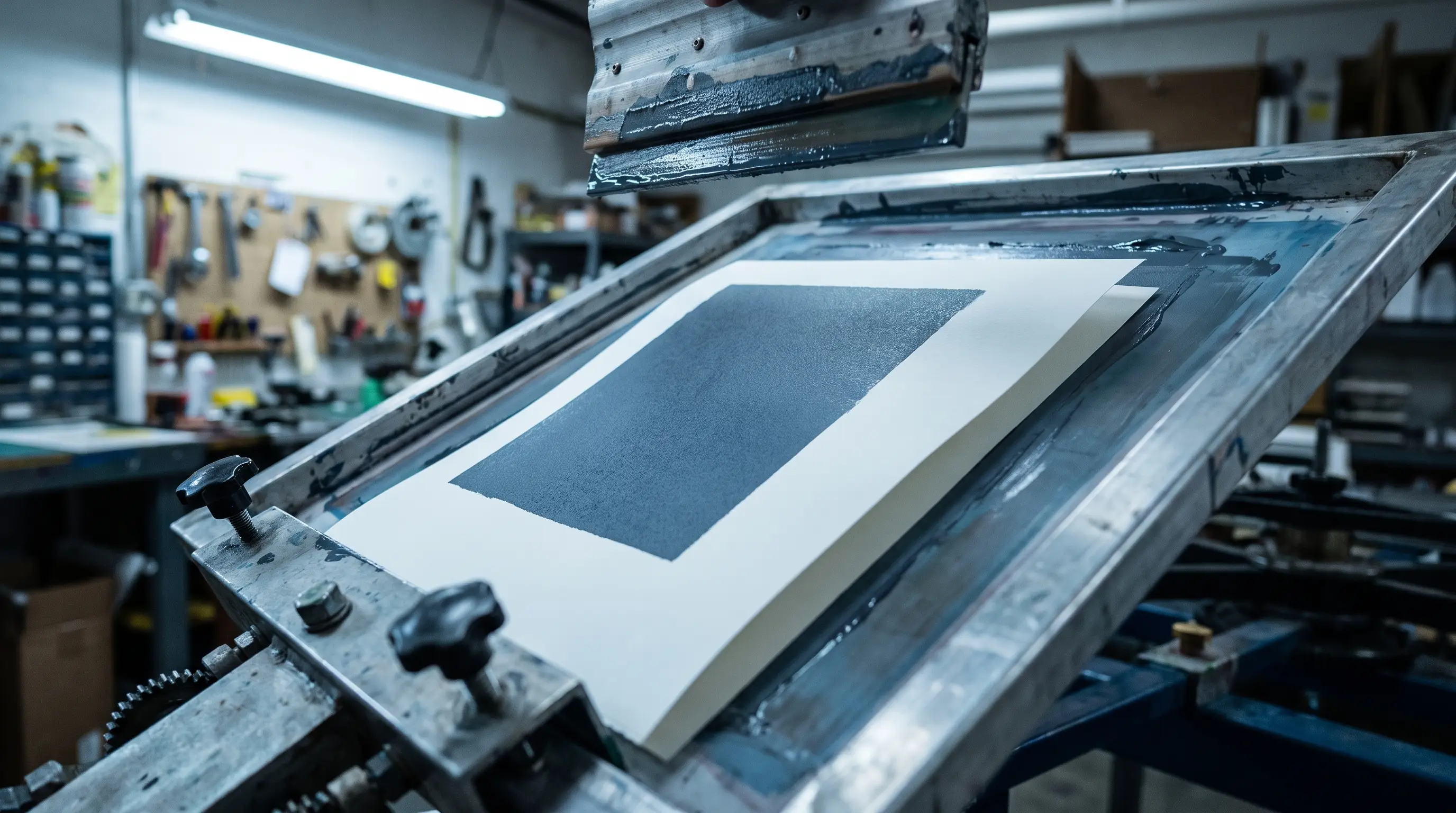
Screen printing forces ink through a fine mesh stencil, one color at a time, onto the surface below. Each color needs its own screen, and every screen has to be prepared, aligned, and dialed in before the run starts. That front-end work is why the first piece is expensive and every piece after it is cheap. The ink also lays down thick, which is the quiet advantage nobody puts on a quote. A heavy ink film survives abrasion, chemicals, and sunlight in a way a thin print cannot, and it holds bold, opaque color even on dark surfaces. When a part has to look right after years of handling, that ink deposit is doing the work.
DTF, or direct-to-film, takes a different route. Your art is printed in full color onto a film, coated with an adhesive powder, then heat-pressed onto the final surface. There are no screens, so there is no per-color setup and no setup cost to amortize. That makes DTF fast and economical for short runs, for artwork with many colors, and for photographic images that would need a separate screen for every shade. It bonds to a wide range of materials and reproduces fine detail cleanly. What it does not do is lay down the same thick, armored ink film that high-volume screen work does, though for most applications that is a difference you will never notice.
Choosing the method for the job in front of you
The decision comes down to a few variables pulling against each other. No single one settles it. You weigh volume against color count against substrate against timeline, and the answer falls out of where those land.
The part that trips people up is where the cost curves cross. Screen printing carries most of its cost at the front, so its price per piece falls fast as quantity climbs. DTF carries little setup and a higher cost per piece, so its line runs nearly flat. Somewhere between them is a break-even quantity, and it moves depending on how many colors the art has. A one-color mark on a big run is screen printing all day. A five-color logo pushes the break-even so high that DTF often wins even at real volume, because every one of those colors is another screen to build on the screen-printing side and costs nothing extra on the DTF side. If a vendor quotes you a five-color job on screen without flinching at low volume, ask what the setup is doing to your unit price.
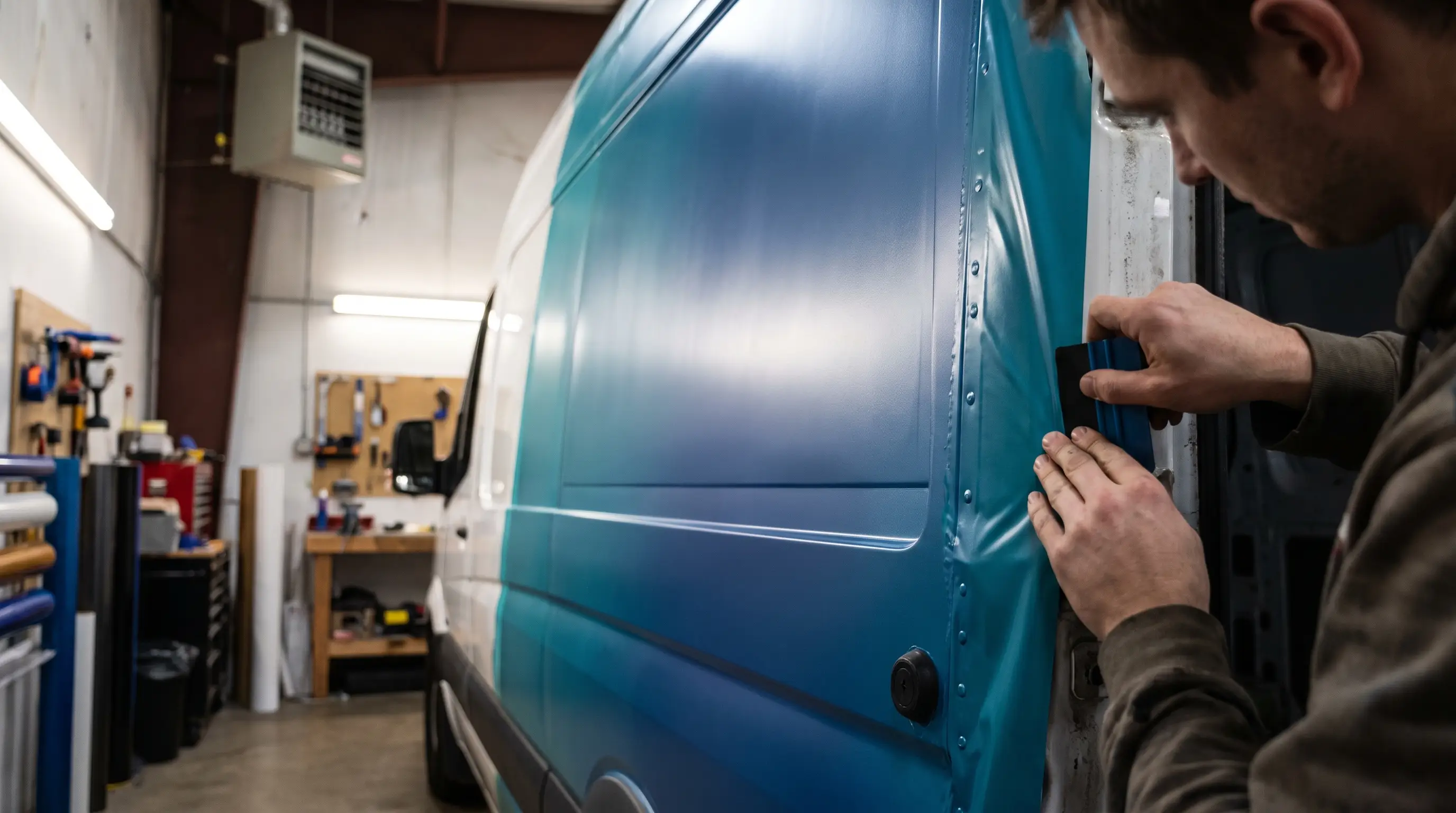
Substrate matters as much as volume, and it is where a lot of the thumb-scuff failures come from. Screen printing bonds beautifully across a wide range of materials, but only when the ink system is matched to the surface. DTF applies across many materials with a heat press, which gives it flexibility on mixed orders. Either way, the surface has to be right for the process, and a five-minute adhesion test on a sample is far cheaper than finding out at the end of a run. We build that test into any job where the material or the application is new, because a proof that passes on paper and fails on the part is not a proof. You can see how we handle high-volume solid-color work on our screen printing line, and where a job calls for detailed full-color work, our custom graphics team handles the digital side.
Lead time is the third lever, and on close calls it decides on its own. DTF needs no screens, so a short job can move from approved file to finished transfer fast, which is what you want when a line goes down and needs replacement graphics this week. Screen printing takes longer to start because the screens have to be made, but once they exist the reorders run quickly and the screens sit ready for the next batch. If you order the same part on a schedule, that reusable setup turns into a lead-time advantage over the life of the program, not a penalty. It is the same logic that makes screen printing the backbone of durable industrial work for our equipment and machinery manufacturers, where the same graphic gets built batch after batch for years.
Give a shop enough to quote it both ways
The fastest way to settle a close call is to let a shop that runs both processes quote the job each way and show you the real numbers for your exact volume. To do that well, they need more than a picture of the art. Send vector files or high-resolution artwork, the exact substrate or a sample of it, the quantity, and a plain description of how the part gets used, whether that is indoor handling, outdoor exposure, or contact with cleaning chemicals. That context is what lets a partner choose the right ink or film and flag any surface that needs treatment before decoration. A quote built on a guess about your material is a quote you cannot trust, and it is where a lot of the thumb-scuff surprises are born.
Think about reorders while you are at it, because the right method for a one-time run is not always the right method for a part you will buy for years. A staple you stock and reorder on a schedule usually belongs on screen, where the screens you build get reused and the unit cost stays low across every batch. A part that changes often, ships in short variable runs, or comes in many versions belongs on DTF, where switching costs you nothing at setup. Plenty of manufacturers split a single product line on purpose, running the steady high-volume items on screen and the seasonal or custom pieces on DTF, so each part gets the method that fits its own demand pattern rather than forcing the whole catalog onto one press.
It helps to picture the two cost lines. Screen printing starts high and drops steeply as quantity climbs, so at a few thousand identical pieces it is hard to beat. DTF starts low and stays nearly flat, so it wins clearly at the small and mid quantities and on anything with heavy color. The crossover is not a fixed number you can memorize. It shifts with your color count, your substrate, and your run size, which is exactly why quoting it both ways beats guessing. When someone gives you a single method without asking any of those questions, they are quoting their machine, not your part.
Most manufacturers do not standardize on one method, and they should not. The high-volume, few-color parts run screen. The short, colorful, or fast-turn parts run DTF. A partner who quotes a close job both ways and shows you the real cost and lead-time difference for your exact volume is doing the part that actually protects your budget. If durability is the whole point of the part, the deeper question is not the print method at all but the material stack underneath it, which we walked through in our guide on choosing graphics that survive real-world conditions. Get the method and the material right together, and the part ships clean the first time.