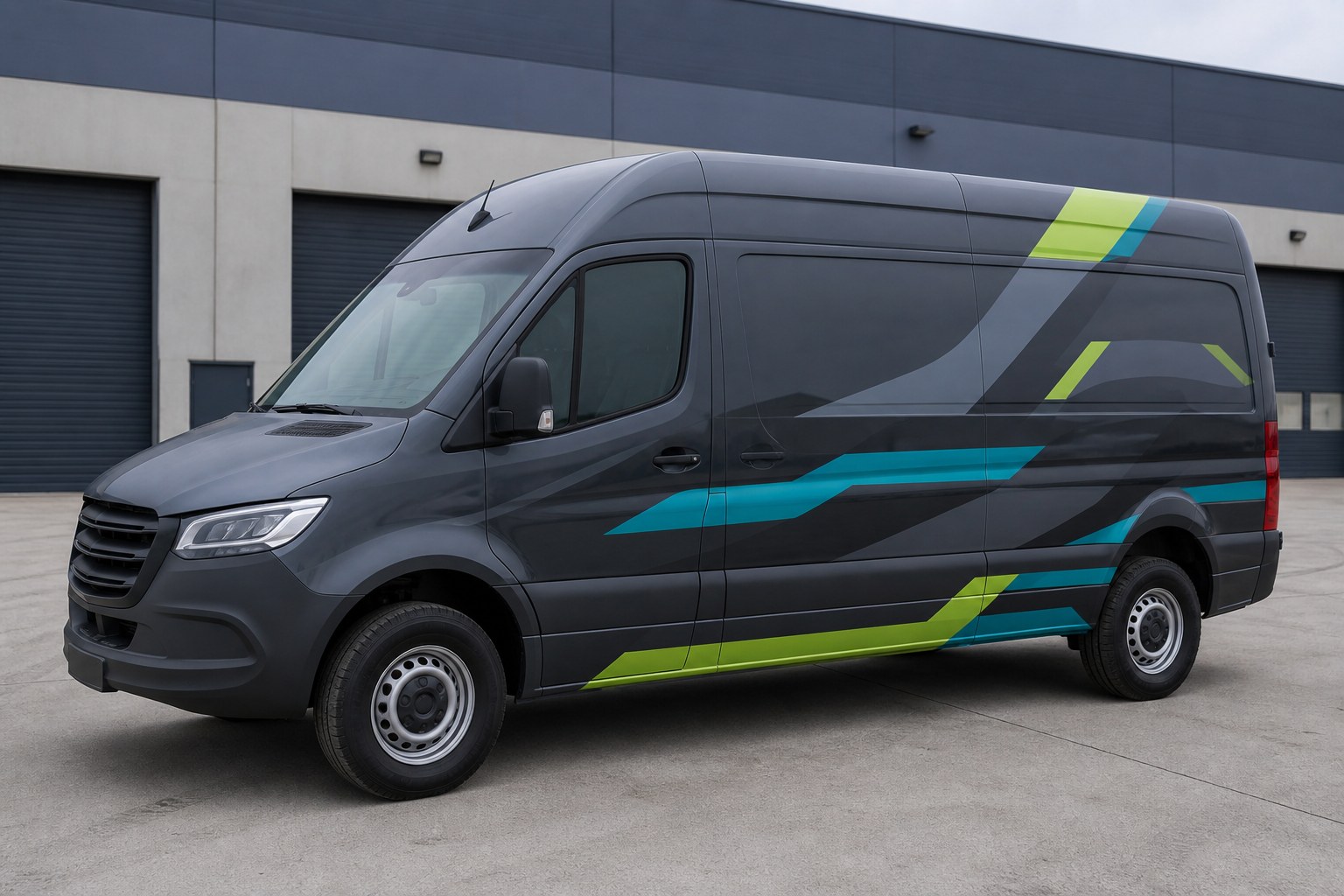
A fleet manager in Charlotte signs off on a set of van wraps. The trucks roll out looking sharp, the branding is consistent, and for a season everything is fine. Then the edges start lifting on the vehicles that sit in the sun all day. By the second summer a couple of vans have seams curling up over the door rivets, and the panels near the roofline have gone chalky and dull. The fleet that was supposed to make the company look established now looks like it stopped caring, and someone has to explain why the wraps need redoing a full year early.
That failure almost never starts at the printer. Commercial vehicle wraps in Charlotte fail for three reasons, and all of them happen before or during installation: the wrong film chosen for a curved, riveted surface, an install rushed to hit a delivery date, or a vehicle that went into the bay still carrying a film of road grime. Fix those upstream and a wrap holds its color and its edges for years. Miss one and the best printing in the state will still peel. If you manage a fleet, that distinction is the whole game, because a wrap is not a marketing expense you approve once. It is a piece of equipment that has to survive the road.
Where wrap failures actually start
Adhesion is a chemistry problem before it is a labor problem. Vinyl bonds to a clean, dry, correctly warmed surface. It does not bond to wax, exhaust residue, or the fine grit that collects along the lower panels of a work van. So the single most common cause of a lifting wrap is a vehicle that looked clean but was not prepped to the level the adhesive needs. A quick wash does not cut it. The panels have to be degreased and wiped down so nothing sits between the film and the paint.
The second cause is material. A flat cargo box is forgiving. A modern van is not, with its body lines, recesses, and rows of rivets that the film has to stretch into and stay put. Film that cannot conform will tent over a rivet and lift at the first temperature swing, and Charlotte gives it plenty of those. Summer heat bakes a parked vehicle, then a cold snap contracts everything overnight. The film has to move with the panel through that cycle without releasing. Cheap material saves money on the quote and spends it back in a reprint.
The third cause is the install itself. A wrap done well is slow. Panels get aligned, applied with controlled heat and firm pressure, then post-heated so the film sets permanently into the rivets and body seams. Rush that and you trap air, miss the edge seal, and leave the recesses under-heated so they release weeks later. This is exactly where a manufacturing mindset beats a sign-shop mindset. We treat application as a controlled process with a sequence and a final inspection, not a race to get the vehicle back out the door. Our graphic installation team works to the same standard whether it is one van or a staged rollout of twenty.
The step that gets skipped most is edge sealing. The perimeter of every panel, and the deep recesses around handles and rivets, is where lift begins, because that is where the film is under the most tension and the least pressure. A proper install goes back over those edges with heat and a sealing pass so the adhesive fully sets into the low spots. It adds time, and time is the first thing a shop cuts when it is behind. You cannot see the difference the day the vehicle leaves. You see it four months later, when a corner starts to creep on the vans that got rushed.
Cast or calendered, and why it matters on a work vehicle
Most wrap disappointments trace back to one decision made at the quote stage: which film. There are two broad families, and they are not interchangeable. Cast vinyl is thinner, more conformable, and dimensionally stable, which is a technical way of saying it goes over curves and rivets cleanly and stays where you put it for years. Calendered vinyl costs less and works fine on flat panels and short-term graphics, but it wants to shrink back toward its original shape over time, which is what pulls edges loose. For a fleet you intend to keep, the film choice is where the job is won or lost.
The right answer is not always the most expensive film on every panel. A partial wrap of flat door graphics on a box truck can run calendered material and be perfectly sound. A full wrap on a fleet of contoured vans that has to look uniform for five years should run cast film with a matching laminate over it. The point is to match the material to the surface and the service life on purpose, vehicle by vehicle, rather than defaulting the whole fleet to whatever film keeps the quote lowest. When someone quotes a full fleet wrap without asking how long you plan to keep the vehicles or how they are stored, that is a sign the material decision is being skipped.
A fleet is a rollout, not six separate print jobs
Wrapping one van is a project. Wrapping a fleet is an operations problem, and it fails in different ways. The first is color drift. If the vehicles get wrapped in batches over months, the graphics have to match across every run, or you end up with a fleet where the blue on the newest three vans is visibly off from the first six. That consistency comes from holding color standards on file and printing every batch against them, not from hoping the reorder lands close. A brand looks bigger and more dependable when every truck is identical. It looks disorganized the moment they stop matching.
The color problem gets worse with time, not better, because a fleet is rarely static. You add a van in year two. You replace one after an accident in year three. Each of those is a reorder that has to match wraps printed long ago. If the original color data and material specs were logged, matching a new vehicle to the existing fleet is routine. If they were not, you are eyeballing a match against vans that have already faded a shade in the sun, and it never quite lands. Keeping that record is unglamorous work. It is also the difference between a fleet that stays uniform for years and one that slowly turns into a patchwork.
The second is downtime. Every vehicle in the bay is a vehicle not on a route, so a fleet rollout has to be scheduled around your operations, not the shop's convenience. That means staging the work in waves, prepping files and materials for the whole fleet up front, and giving you a schedule you can plan around. This is the part a print-only vendor tends to ignore and the part that actually protects your week. It is the same discipline behind our custom graphics work, where the plan is set before anything gets printed so the production run does not become your problem to manage.
There is also a durability question that a fleet raises more sharply than a single vehicle. The same wrap that survives a garaged sales car may not survive a delivery van that lives outside and runs the interstate daily. Abrasion, UV, and washing all add up faster on hard-working vehicles, which is why material choice and lamination matter more the harder the fleet works. If you want the longer version of how environment drives material selection, we walked through it in our guide on choosing graphics that survive real-world conditions, and the same logic applies on the road.
One more thing worth flagging before you spec a fleet. If any of your vehicles operate in regulated contexts, such as work zones or Department of Transportation projects, reflectivity and marking requirements can apply on top of the branding, and those specifications should be confirmed against the current rules rather than assumed. We handle that category of work through our Department of Transportation graphics, and it is a different conversation from a standard commercial wrap. For a normal branded fleet it will not come up. For a fleet that touches public roadway work, it should be settled before production, not after.
A wrap is the cheapest advertising your company will ever buy, but only if it lasts. The way you get there is not a flashier design. It is the right film on the right surface, an install run like a process, and a rollout planned around your operation instead of against it. Get those settled first, and the fleet that leaves the bay will still look sharp long after the novelty wears off. If you are planning a wrap or a full fleet rollout in the Charlotte area, that is the conversation worth having before anything gets printed.